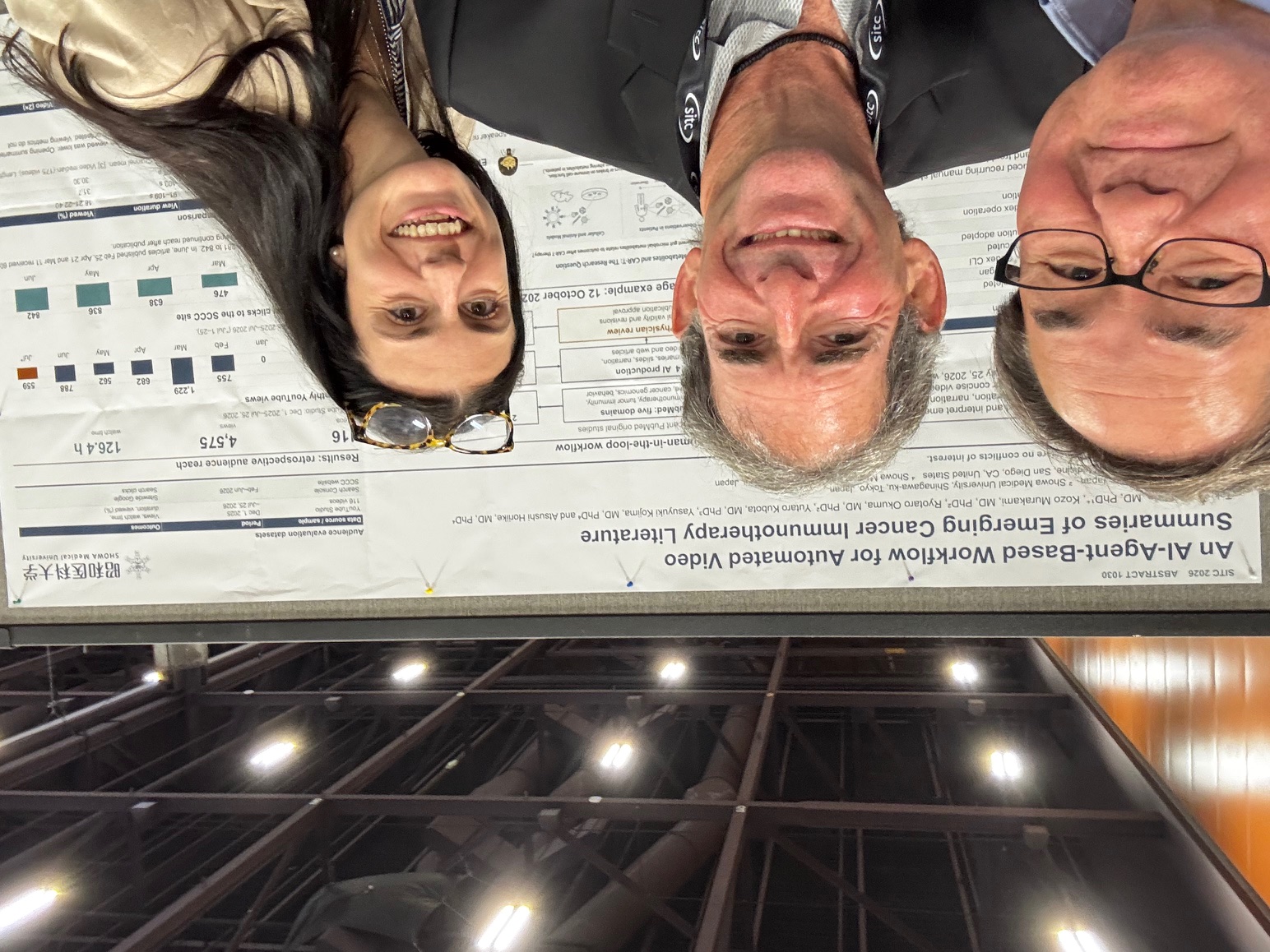
The presentation at SITC 2026
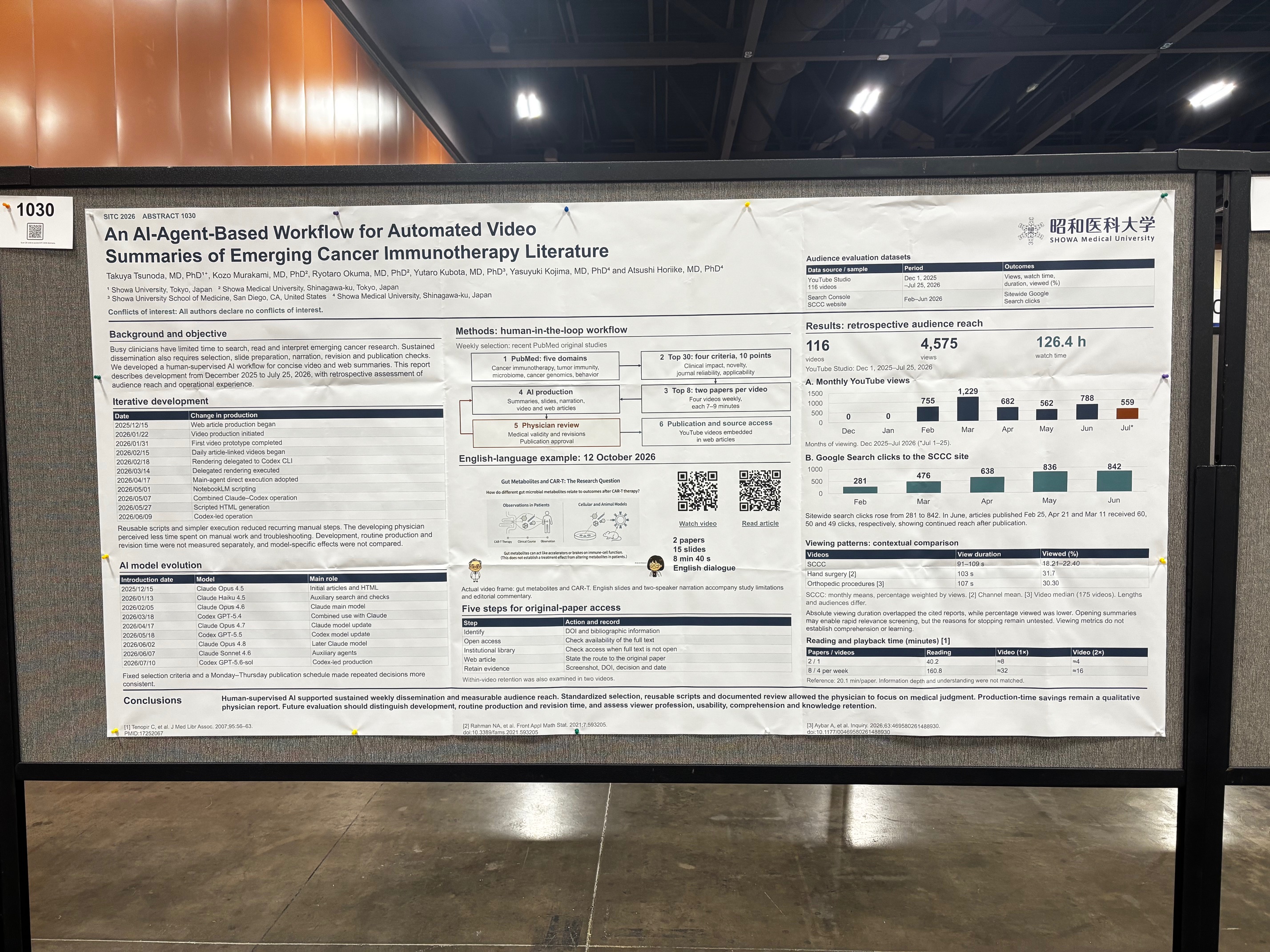
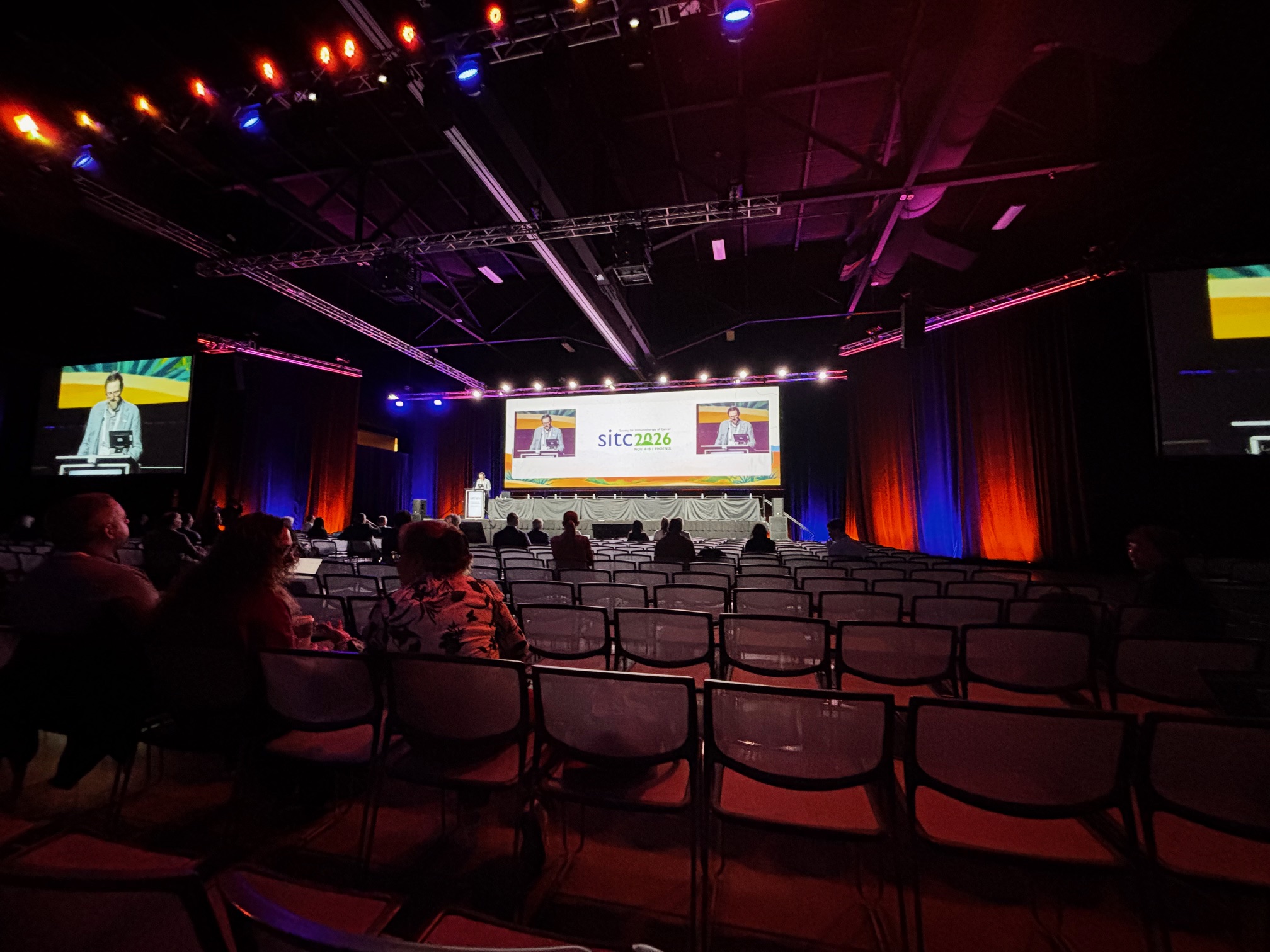
At the meeting in Phoenix, the presentation introduced a physician-supervised workflow for turning emerging medical research, including cancer immunotherapy studies, into concise videos and web articles. It also reported experience gained through ongoing production.
Selecting, producing and reviewing
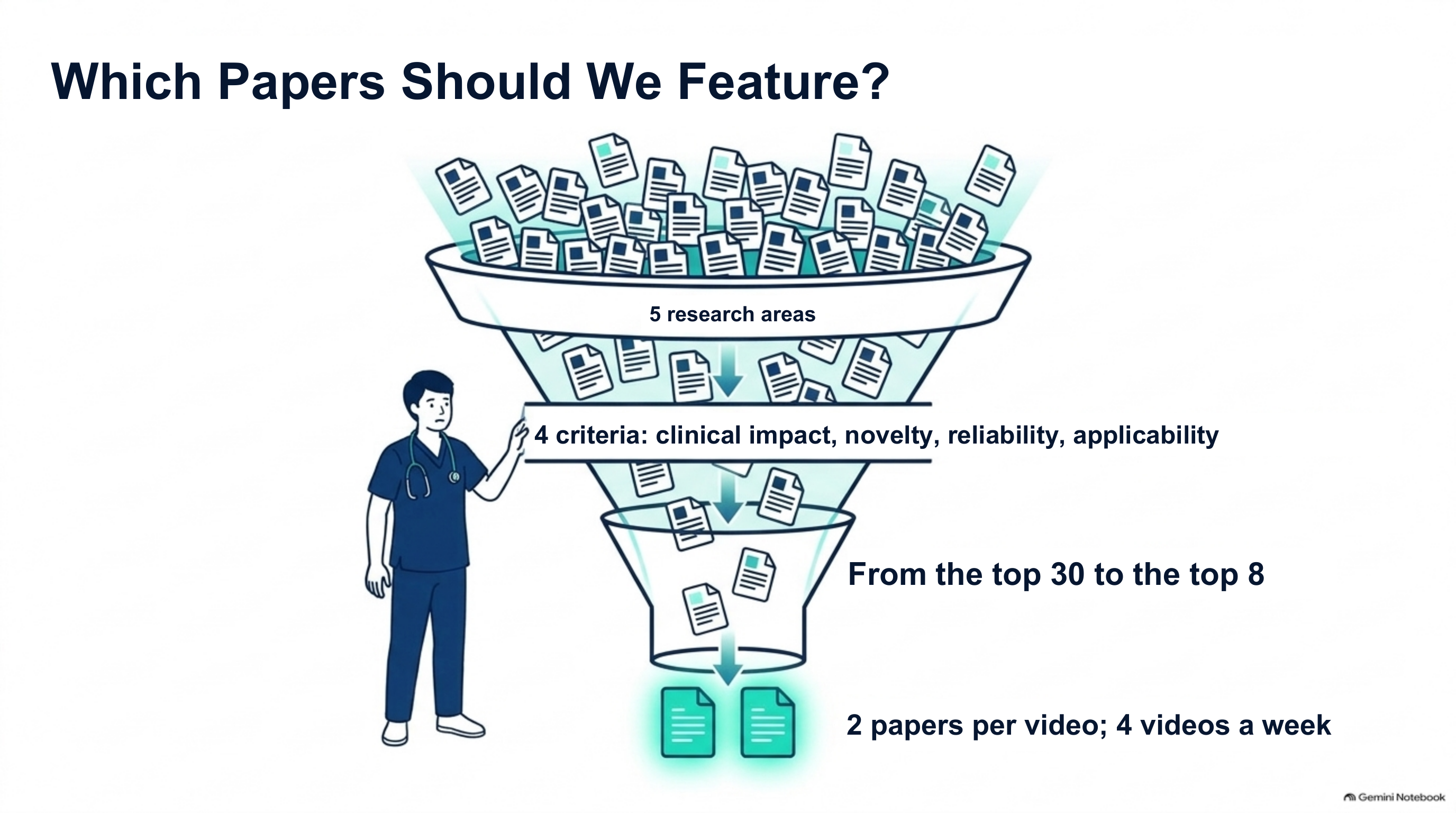
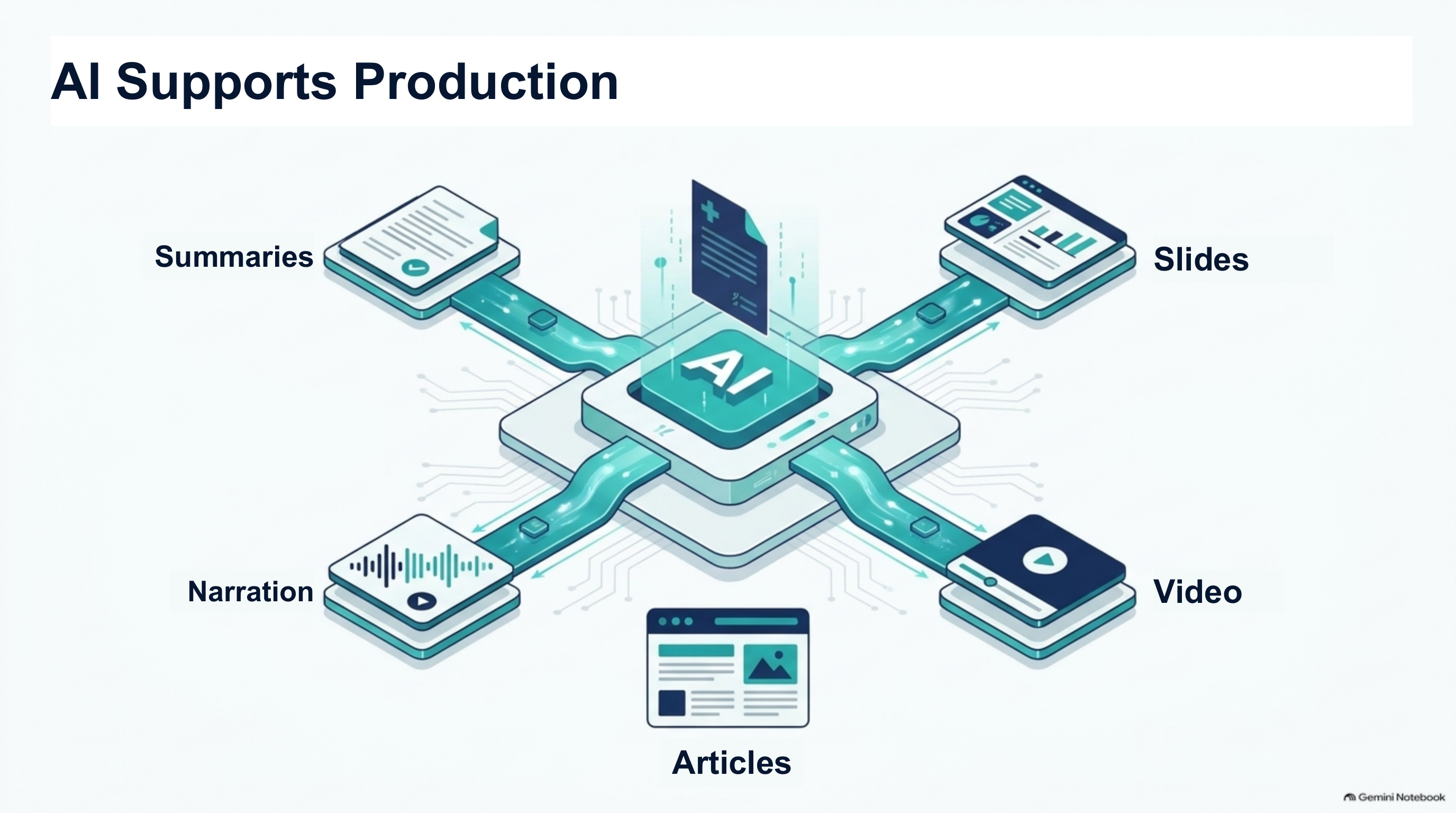
Recent original studies are identified through PubMed. Candidates are assessed for clinical impact, novelty, journal reliability and applicability. The workflow narrows the top 30 papers down to eight, with two papers covered per video and four videos produced each week. AI supports summaries, slides, narration, videos and articles. Before publication, the physician checks the numbers, interpretation and study limitations and makes revisions where needed.
How far the content reached
The poster retrospectively summarized video viewing in YouTube Studio and search traffic to the SCCC website in Google Search Console.
| Measure | Result |
|---|---|
| Videos included | 116 |
| Views | 4,575 |
| Total watch time | 126.4 hours |
Source: the poster and YouTube Studio. Views are not the number of individual viewers.
| Month | Clicks |
|---|---|
| February | 281 |
| March | 476 |
| April | 638 |
| May | 836 |
| June | 842 |
Source: the poster and Google Search Console. These are sitewide figures. They do not establish that videos caused the increase.
Selected feedback from visitors
Professor Tsunoda relayed the following impressions and suggestions from doctors who visited the poster. The points below are English translations of some of that feedback:
- They had not seen an initiative like this before and found it unique.
- The English version was easy for native English speakers to follow.
- The videos were cute.
- The approach might also be interesting in fields beyond cancer.
- Considering more factors might bring a different set of papers to light.
These are examples, rather than a complete list of comments. They reflect interest in the approach, clarity and approachable presentation, alongside suggestions for further development.
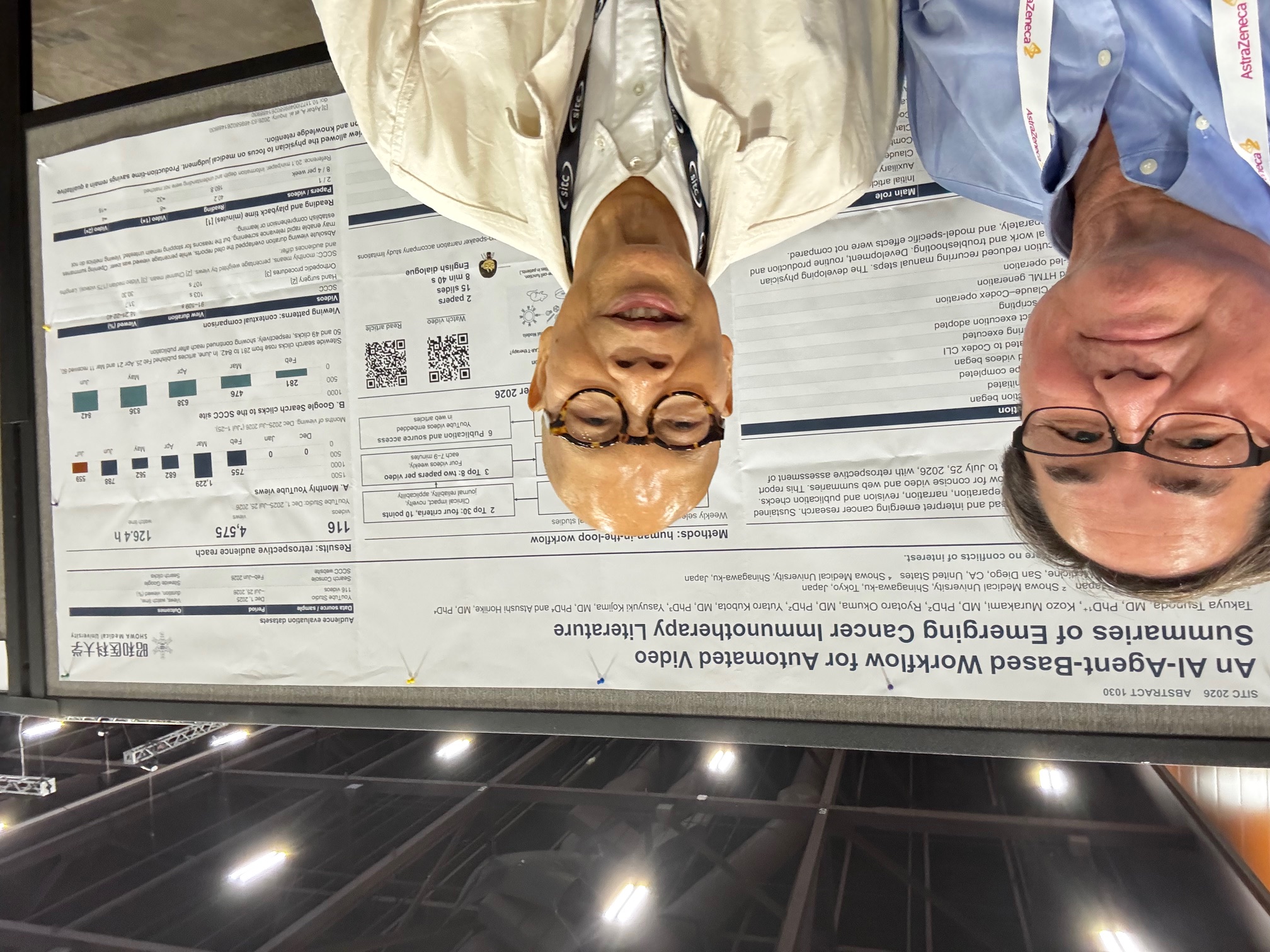
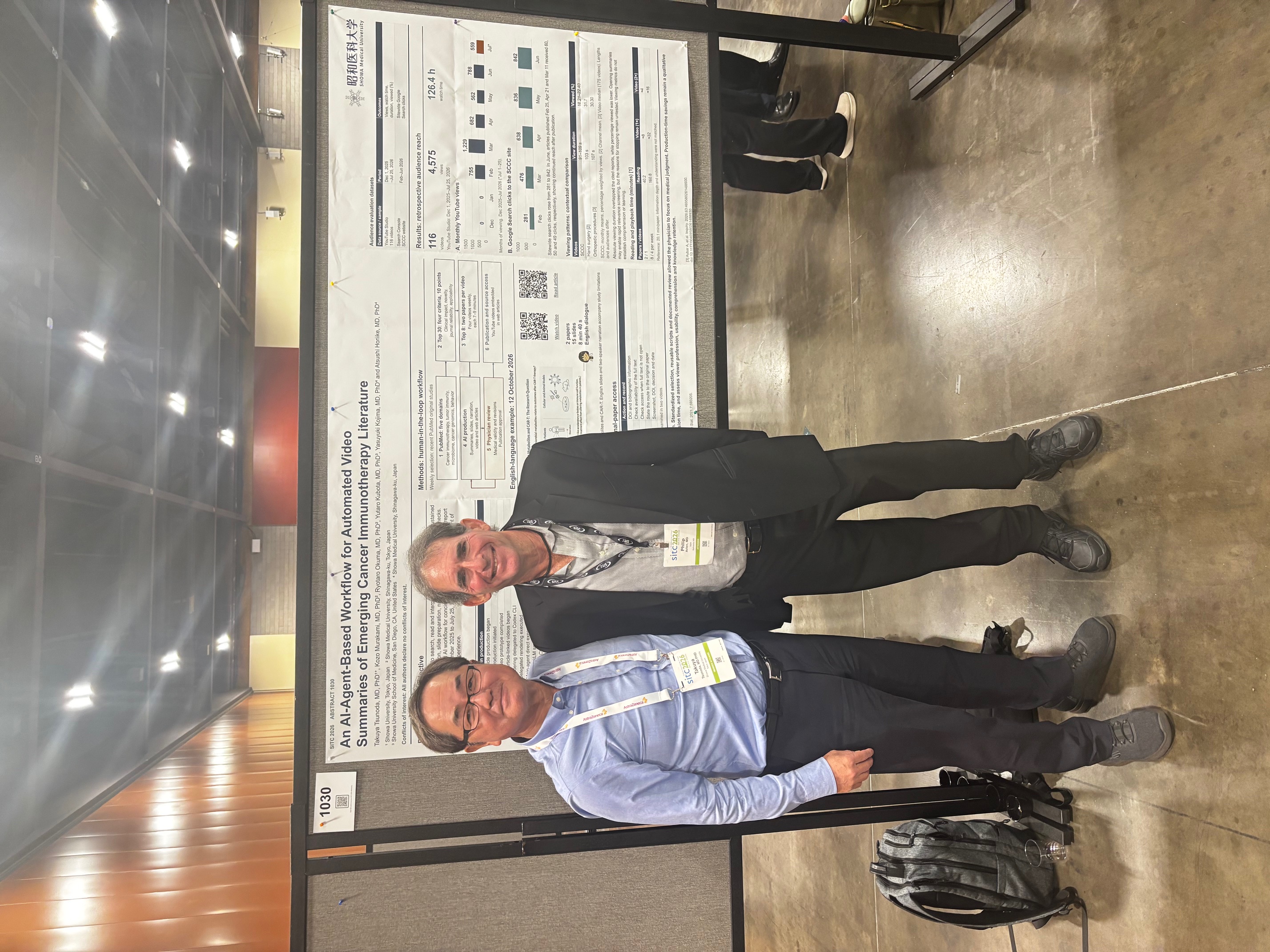
Interpretation in the presentation
Through continuing production, more consistent procedures and reusable tools, the physician reported being better able to focus on medical judgment. Providing a route from summaries back to the original studies was also part of the workflow.
Limitations and future work
Production-time savings were reported as the physician's perception. Development, routine production and revision time were not measured separately, and AI models were not compared. Viewing and click counts do not establish understanding, learning or effects on clinical care.
Visitor feedback was informal. It does not establish a world-first claim or constitute a formal evaluation of the English version. Future work should examine users' professional backgrounds, usability, comprehension and knowledge retention.
SCCC editorial commentary
This presentation introduced our work to keep sharing articles and videos about research, with a physician reviewing the content while using AI. Visitors commented on the originality of the approach, the clarity of the English version, and the approachable style of the videos. We would like to explore their suggestions for applications beyond cancer and for broadening the factors used to select papers. We also want to examine how the information helps people understand and learn once it reaches them.
Source materials
- Supplied poster: SITC2026_poster_ja_v7.pptx, with photographs of Abstract 1030.
- Visitor feedback relayed by Professor Tsunoda.
- Published Japanese report